

Therapy dog supports student well-being at School of Dentistry
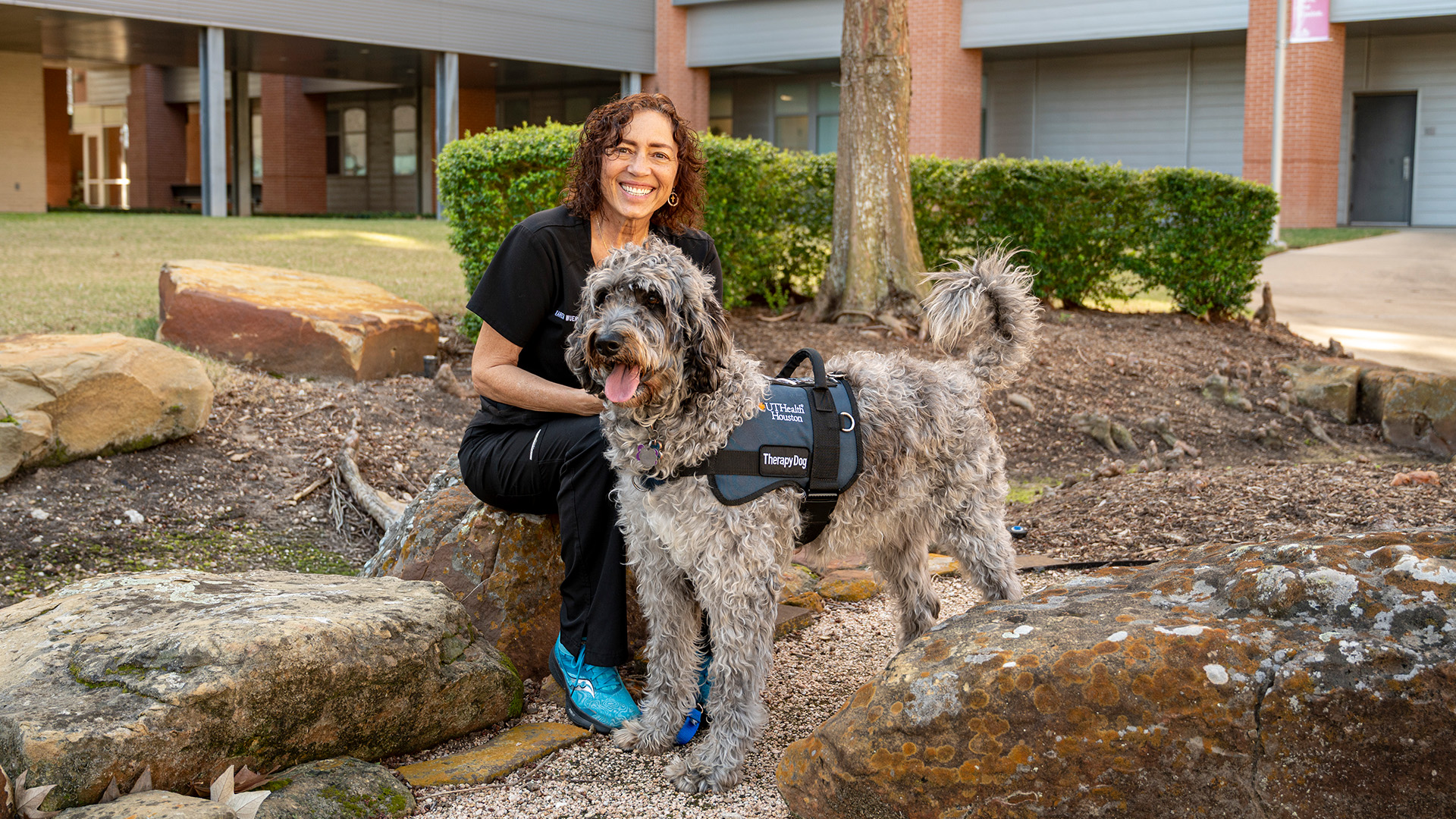
Students and faculty can request Koosha for campus visits, and Wuertz plans to bring him to select outdoor student and faculty events throughout the year. Photo by Dylan Allen.
UTHealth Houston School of Dentistry students and faculty have the chance for a little extra stress relief thanks to a certified therapy dog owned by Karen Wuertz, DDS, associate professor in the Department of General Practice and Dental Public Health.
Koosha, a five½-year-old labradoodle, did not have an easy start. As the runt of his litter, he was severely ill when Wuertz adopted him at five months old. He fully recovered nearly nine months later, and despite his hardships, his affectionate personality emerged and earned him the nickname “Loverboy.”
“He’s truly never met a stranger — dog or person — that he doesn’t like,” Wuertz said.
Wuertz became interested in bringing Koosha to the School of Dentistry after reading a UTHealth Houston story about Allison R. Ownby, PhD, at McGovern Medical School, who brings her therapy dogs to campus. She connected with Ownby to learn more about the requirements and processes of therapy pet certification.
“I love to experience and watch the change in people's faces and demeanor, especially the big smiles, when they meet him for the first time,” she said. “It’s really a privilege for me to share him with everyone and definitely worth all the time spent in training to prepare him to be a therapy dog.”
Koosha’s training has been ongoing since puppyhood, beginning with basic and advanced obedience. He completed the American Kennel Club’s Canine Good Citizen program, a 10-skill evaluation of manners, temperament, obedience and socialization, and later earned certification through PAWS for Therapy, a Houston-area volunteer organization. Recently, Koosha and Wuertz volunteered with PAWS at a Cypress library, where children read aloud to therapy dogs at designated stations.
Students and faculty can request Koosha for campus visits, and Wuertz plans to bring him to select outdoor student and faculty events throughout the year. Last year, Koosha visited the school three times, with the initial visit focusing on acclimating him to the environment, including elevators, stairs, and the large number of students.
“This past December during finals, the fourth-year class president requested Koosha to spend the day and be available to help with the stress during that time,” Wuertz said. “I love watching Koosha interact with the students, faculty, and staff. His personality is so sweet, and he craves all the attention.”
Research has shown that interactions between people and dogs can support emotional well-being by increasing oxytocin, often referred to as the “love” hormone, while also reducing cortisol, a hormone associated with stress. Studies indicate that gentle and sustained contact, such as petting, is linked to calmer behavior and lower stress levels in people, helping drive the use of therapy dogs in high-stress situations.
Wuertz said students’ stress levels visibly drop during visits.
“Students get really excited when he visits. They sit on the floor with him and give him hugs, treats, and lots of love. He just eats it up,” she said.
Outside of therapy work, Koosha participates in agility classes and “Pup-lates,” a Pilates-inspired activity that supports strength, balance, and coordination.
“He brings a lot of joy,” Wuertz said. “I’m looking forward to everyone getting to know him.”
Wuertz earned her Doctor of Dental Surgery degree from UT Health San Antonio School of Dentistry in 1992 and completed a general practice residency at Jewish Hospital in St. Louis in 1993. Her clinical interests include general dentistry and dental sleep medicine.