

Young named Graham Family Scholar for oral cancer immunotherapy research
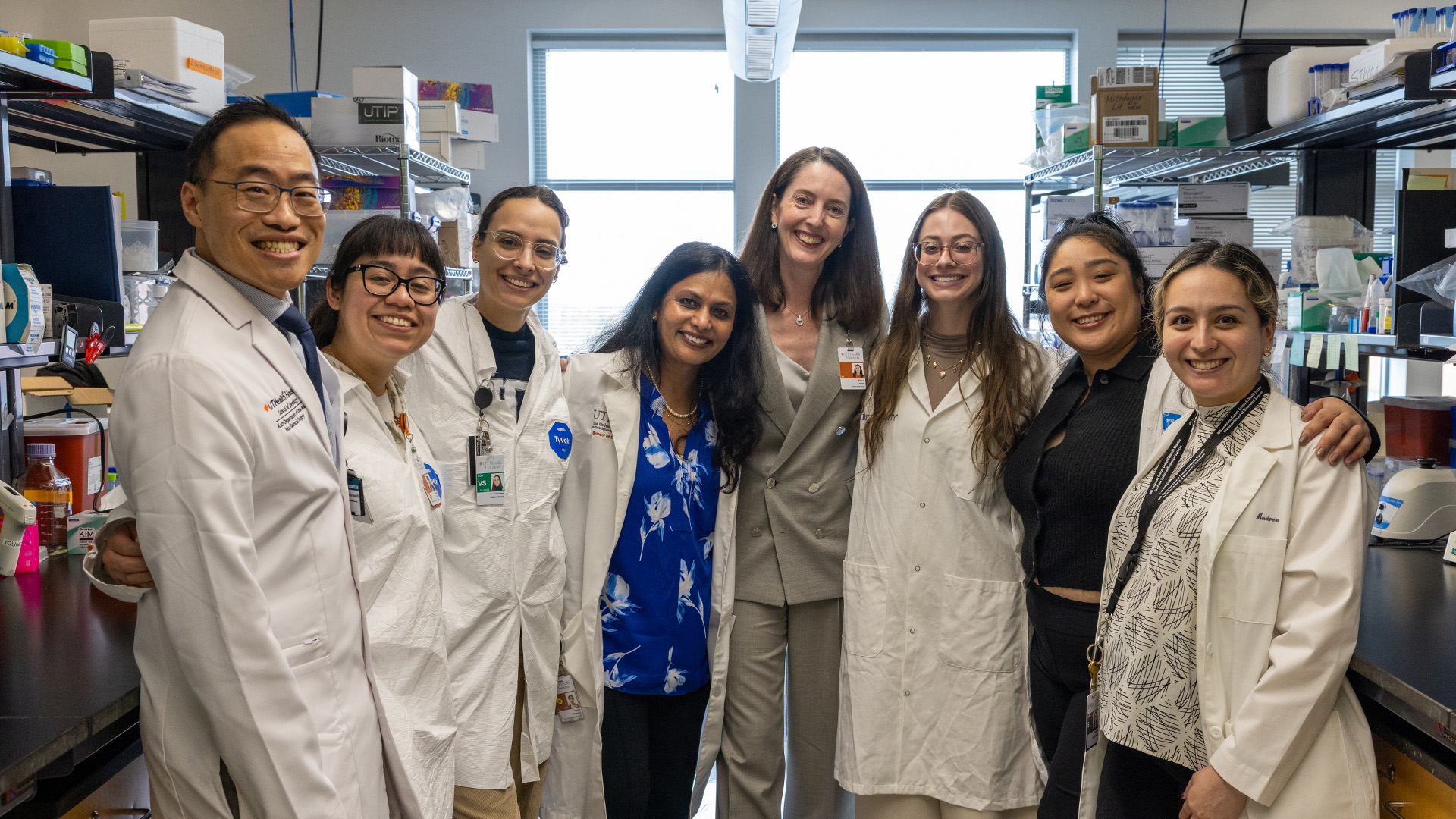
UTHealth Houston School of Dentistry’s Simon Young, DDS, MD, PhD (left), has been named the 2026 Graham Family Scholar. Photo by UTHealth Houston Creative Services.
Simon Young, DDS, MD, PhD, professor and acting chair of the Bernard and Gloria Pepper Katz Department of Oral and Maxillofacial Surgery at UTHealth Houston School of Dentistry, has been named the 2026 Graham Family Scholar, receiving a $450,000 research award to advance a novel immunotherapy strategy aimed at preventing oral cancer recurrence.
Young’s project, titled “Targeting oral cancer recurrence with immune microfactories: A window-of-opportunity treatment strategy,” focuses on implantable cell factories designed to deliver powerful anti-tumor signals directly at cancer sites following surgery.
The concept grew from Young’s long-standing collaboration with bioengineers at Rice University on biomaterials and immunotherapy platforms.
From academic connection to translational strategy
Young traces the origins of the project to an academic meeting on tissue engineering, where he connected with collaborators developing implantable therapeutic systems. While earlier work explored bacteria-based delivery, the current effort focuses on genetically engineered human cells that can safely release cancer-fighting molecules.
In this case, the engineered cells are designed to produce immune-stimulating proteins such as interleukin-12, a cytokine known for its anti-tumor activity, and immune checkpoint inhibitor antibodies that enhance the body’s ability to attack cancer.
“These cells can be genetically engineered to release specific immune signals,” Young said. “In our case, they’re designed to produce molecules that stimulate the body’s immune system to attack cancer.”
Encapsulated within a protective device, the cells act as miniature factories — continuously generating therapeutic agents at the tumor site rather than relying on systemic drug delivery.
Aiming for human trials
A key goal of the Graham Family Scholar project is to generate the preclinical data required to move the technology toward clinical testing in patients with head and neck cancers.
Young emphasized that the proposal was intentionally designed to be translational rather than exploratory.
“We wanted to propose something that could realistically move into human studies within the next few years,” he said.
Funding will support studies in relevant preclinical models to evaluate safety, immune response, and effectiveness, steps necessary for regulatory approval to begin human trials.
“Ultimately, the goal is not just to develop innovative science, but to translate it into treatments that benefit patients,” Young said.
Philanthropy accelerating cancer innovation
The Graham Family Scholar program supports high-impact research across UTHealth Houston.
Young said he looks forward to meeting the Graham family and demonstrating how their support is accelerating progress toward new cancer therapies.
“This kind of philanthropic support allows us to move promising ideas forward much faster than traditional funding alone,” he said.
If successful, the immune microfactory approach could represent a new class of localized cancer treatments — one that harnesses engineered cells to provide sustained, targeted immunotherapy precisely where it is needed most.
The funding must be used by Aug. 31, 2028, providing support over the next several years as the team works toward clinical translation.