

Fakhouri awarded grant to investigate craniofacial birth defects
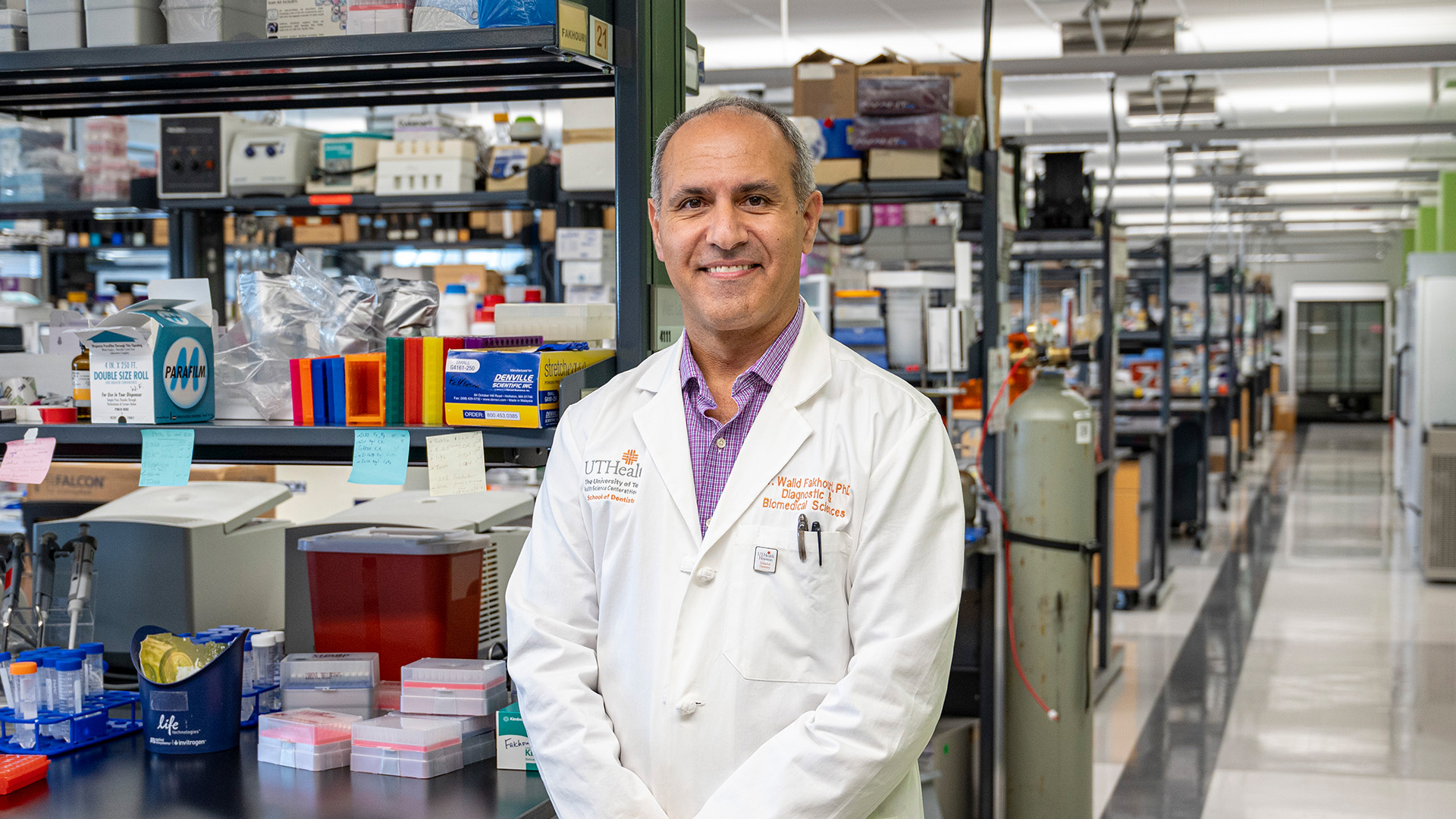
Walid Fakhouri, MSc, PhD, has been awarded a one-year, $400,000 National Institute of Dental and Craniofacial Research grant to investigate the molecular mechanisms underlying craniofacial development and associated birth defects. Photo by Kyle Rogers.
Walid Fakhouri, MSc, PhD, associate professor in the Department of Diagnostic and Biomedical Sciences at UTHealth Houston School of Dentistry, has been awarded a one-year, $400,000 R56 grant from the National Institute of Dental and Craniofacial Research, part of the National Institutes of Health, to investigate the molecular mechanisms underlying craniofacial development and associated birth defects.
The project, titled “Function of TWIST1 and its dependent-regulatory pathway in craniofacial bone development,” will examine how changes in TWIST1, a critical developmental transcription factor, and its downstream regulatory pathways affect craniofacial bone development and facial symmetry.
The R56 provides short-term support for high-priority research based on the merit of a pending R01 application.
“Receiving the R56 award provides important momentum and ensures continuity for our research program,” Fakhouri said. “It will allow us to conduct key experiments and generate additional data.”
An unexpected connection
The research builds on findings from Fakhouri’s laboratory showing that phosphorylation and acetylation of the TWIST1 gene are essential for proper craniofacial development. These processes help regulate the fate of bone- and cartilage-forming cells and contribute to facial symmetry.
His team also found that disrupting TWIST1 phosphorylation can result in left-sided mandibular defects accompanied by congenital cardiac abnormalities, including ectopia cordis and defects in heart patterning.
“These findings reveal a previously unrecognized connection between cardiac and craniofacial development, demonstrating that normal heart development is critical for proper facial development,” Fakhouri said.
The discovery may help researchers better understand why some craniofacial birth defects occur more frequently on the left side of the face.
“Although cleft lip and palate are among the most common birth defects, the reasons they occur more frequently on the left side of the face remain largely unknown,” Fakhouri said.
Fakhouri’s laboratory is investigating how alterations in TWIST1 and its downstream pathways affect facial symmetry and craniofacial bone development. The team is also examining the relationship between craniofacial and congenital heart defects, which may help explain why some patients are affected by both conditions.
“Understanding this relationship may help explain the predominance of left-sided orofacial clefts and why some patients are affected by both craniofacial and cardiac abnormalities,” he said.
Exploring potential therapeutic targets
Fakhouri and his collaborators will focus on defining the molecular pathways regulated by TWIST1 and determining how these pathways contribute to craniofacial and cardiac development. The team will also examine how disease-associated mutations disrupt these processes and whether pharmacological interventions can mitigate their effects.
“A major goal of this work is to identify TWIST1-dependent pathways that could be targeted therapeutically,” Fakhouri said.
The research aims to lay the groundwork for new approaches to preventing, diagnosing, or treating craniofacial birth defects and associated congenital heart disorders. Over time, Fakhouri’s team hopes the findings will help inform improved screening, diagnosis, risk assessment, and treatment.