Overview
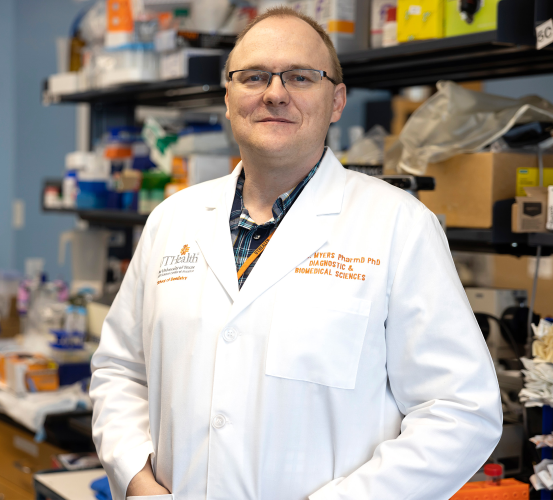
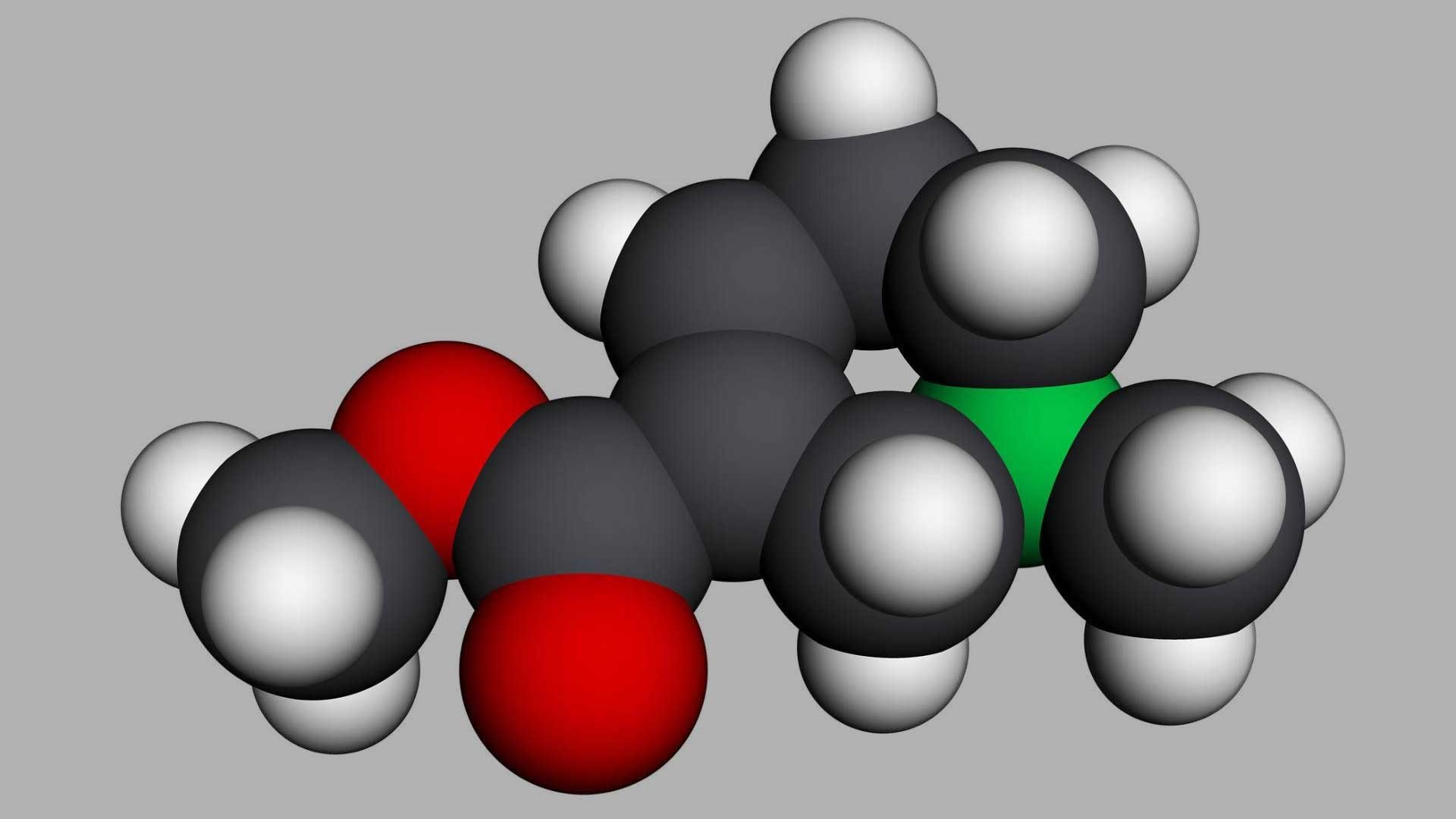
The long-term goal of Dr. Myers’ research is to generate novel scientific information that ultimately improves and advances human health. A major focus is studying the pernicious areca nut, one of the most widely abused substances in the world and a potent oral carcinogen. Although areca nut consumption is well-documented outside of the US, its use/abuse among immigrant populations in the US is poorly understood. His recent published work demonstrated that a multitude of commercialized areca nut products can be easily purchased in Houston retail markets. In the laboratory, he studies how humans metabolize toxic constituents of the nut, collectively called the areca alkaloids, and how these nitrogenous chemicals interact with alcohol and menthol in the liver.
Another facet of Dr. Myers’ research is in improving pharmaceutical waste management. Specifically, he collaborates with an industry partner to develop safe and effective ways to destroy leftover propofol intravenous solutions which are normally prone to contamination by microbial pathogens if not properly disposed.
Another facet of Dr. Myers’ research includes pharmacokinetic trials – to enhance knowledge about the absorption, metabolism, disposition and excretion (ADME) of medications. In collaboration with colleagues at M.D. Anderson Cancer Center, he aims to discover if blood levels of varenicline (Chantix), a drug approved by the FDA to assist in smoking cessation, and/or genetic make-up can predict treatment outcomes (cessation). He also collaborates M.D. Anderson Cancer Center investigators to determine the influence of genetic variations of UGT isoenzymes on the pharmacokinetics and analgesic activity of hydromorphone (Dilaudid) in cancer patients. In the stem cell transplant setting, Dr. Myers maintains a keen interest in studying busulfan, specifically how it interacts with other drugs and the role of its unique metabolite, EdAG, in mediating treatment-related cellular toxicity.
-
Unraveling Toxicokinetics and Toxicodynamics of Areca Alkaloids
Abuse of areca nut (often referred to as “betel nut”) is an emerging concern in the US. Although consumption of areca nut and areca products has been occurring since antiquity, very little is known about how alkaloids (e.g., arecoline, guvacoline) present in the nut interact with other drugs of abuse, OTC agents, and FDA-approved medications. This project aims to identify the major elimination mechanisms of areca alkaloids in human tissues, and identify factors that contribute to inter-individual variability in these elimination pathways. Furthermore, human-relevant rodent models are used to model pharmacologic behavior of areca alkaloids in the presence of interacting substances.
-
Understanding Implications of Areca Nut Misuse and Abuse in the US
Consumption of the areca (betel) nut is the world's fourth-most commonly abused substance, only after caffeine, alcohol, and nicotine. Areca nut usage is prevalent in many Asian and Pacific Island nations, but also within subpopulations in the US. This has notable implications to US dental practice because areca nut consumption is associated with myriad oral side effects (external staining of teeth and gums, halitosis, periodontitis, pre-cancerous lesions of the oral cavity, and oral carcinomas). In this project, the Myers laboratory is seeking to learn more about areca nut usage in Houston and surrounding areas.
-
Precision Medicine: Utilization of Pharmacokinetic & Pharmacogenetic Trials
The traditional prescribing practice of “Same drug, Same dose, for Each Patient” has led to many treatment failures, ushering in the modern practice of precision medicine. Clinical pharmacology trials are pivotal for determining the appropriate use of medicines according to patient characteristics (e.g., disease, genetics, age, concomitant medications). Dr. Myers collaborates on pharmacokinetic and pharmacogenetic clinical trials with investigators at MD Anderson Cancer Center. The overall goal of these projects is to improve optimal, safe dosing regimens of oncologic medications and improve treatment outcomes.
-
Fluoride Project
Consumption of bottled water in place of tap water is a common practice in the United States. With the rising interest in water fluoridation and proposed human toxicities, there is a pressing need to understand fluoridation status in commercial water products along with other consumable fluids. Also concerning is the level of acidity in consumable fluids and risk of oral health complications, such as erosive teeth wear. The goal of this project is to shed light on fluoride levels and pH, two parameters that are significant but rarely reported on packaging labeling.
Publications
- Macdonell M, Kawedia JD, Zhang YP, Roux R, Myers AL. Chemical Degradation of Intravenous Chemotherapy Agents and Opioids by a Novel Instrument. Hosp Pharm. 2021 Oct;56(5):576-583. doi: 10.1177/0018578720931456. Epub 2020 Jun 8. PMID: 34720163; PMCID: PMC8554597.
- Tungare S, Myers AL. Retail Availability and Characteristics of Addictive Areca Nut Products in a US Metropolis. J Psychoactive Drugs. 2021 Jul-Aug;53(3):256-271. doi: 10.1080/02791072.2020.1860272. Epub 2021 Jan 25. PMID: 33491557.
- Hoang S, Dao N, Myers AL. Electrophilic reactivity of the Busulfan metabolite, EdAG, towards cellular thiols and inhibition of human thioredoxin-1. Biochem Biophys Res Commun. 2020 Dec 10;533(3):325-331. doi: 10.1016/j.bbrc.2020.09.038. Epub 2020 Sep 18. PMID: 32958252.
- Desta Z, Gammal RS, Gong L, Whirl-Carrillo M, Gaur AH, Sukasem C, Hockings J, Myers A, Swart M, Tyndale RF, Masimirembwa C, Iwuchukwu OF, Chirwa S, Lennox J, Gaedigk A, Klein TE, Haas DW. Clinical Pharmacogenetics Implementation Consortium (CPIC) Guideline for CYP2B6 and Efavirenz-Containing Antiretroviral Therapy. Clin Pharmacol Ther. 2019 Oct;106(4):726-733. doi: 10.1002/cpt.1477. Epub 2019 Jul 5. PMID: 31006110; PMCID: PMC6739160.
- Myers AL, Kawedia JD, Nader A, Westin JR, Shank BR. A rare case of methotrexate and primaquine co-administration in a mantle cell lymphoma patient. J Clin Pharm Ther. 2019 Oct;44(5):800-804. doi: 10.1111/jcpt.12849. Epub 2019 May 20. PMID: 31111511.
- Kawedia JD, Kalariya N, Gulbis AM, Andersson BS, Myers AL. Pharmacokinetics: Unique Challenges in Blood Monitoring for Oncology Nurses. Clin J Oncol Nurs. 2019 Apr 1;23(2):191-196. doi: 10.1188/19.CJON.191-196. PMID: 30880803.
- Nieto Y, Thall PF, Ma J, Valdez BC, Ahmed S, Anderlini P, Popat U, Jones RB, Shpall EJ, Hosing C, Qazilbash M, Kebriaei P, Alousi A, Timmons M, Gulbis A, Myers A, Oki Y, Fanale M, Dabaja B, Pinnix C, Milgrom S, Champlin R, Andersson BS. Phase II Trial of High-Dose Gemcitabine/Busulfan/Melphalan with Autologous Stem Cell Transplantation for Primary Refractory or Poor-Risk Relapsed Hodgkin Lymphoma. Biol Blood Marrow Transplant. 2018 Aug;24(8):1602-1609. doi: 10.1016/j.bbmt.2018.02.020. Epub 2018 Mar 2. PMID: 29501779; PMCID: PMC8212703.
- Shank BR, Deaver M, Baker A, Myers AL, Zhang YP, Anderegg B, Bassett R, Westmoreland M. Interdisciplinary implementation of tacrolimus intravenous standard concentration in hematopoietic stem cell transplantation recipients. J Oncol Pharm Pract. 2018 Jul;24(5):365-370. doi: 10.1177/1078155217710552. Epub 2017 May 29. PMID: 28554241.
- Myers AL, Kawedia JD, Champlin RE, Kramer MA, Nieto Y, Ghose R, Andersson BS. Clarifying busulfan metabolism and drug interactions to support new therapeutic drug monitoring strategies: a comprehensive review. Expert Opin Drug Metab Toxicol. 2017 Sep;13(9):901-923. doi: 10.1080/17425255.2017.1360277. Epub 2017 Aug 17. PMID: 28766962; PMCID: PMC5584057.
- Myers AL, Zhang YP, Kawedia JD, Zhou X, Sobocinski SM, Metcalfe MJ, Kramer MA, Dinney CPN, Kamat AM. Solubilization and Stability of Mitomycin C Solutions Prepared for Intravesical Administration. Drugs R D. 2017 Jun;17(2):297-304. doi: 10.1007/s40268-017-0183-y. PMID: 28470465; PMCID: PMC5427054.