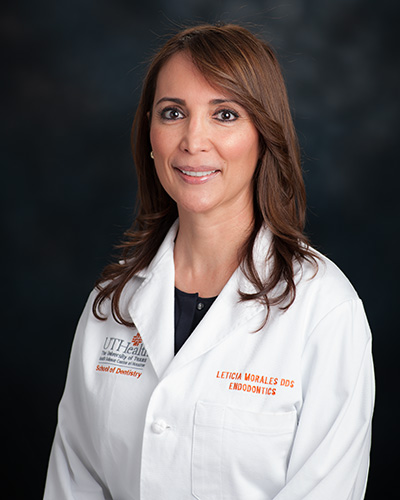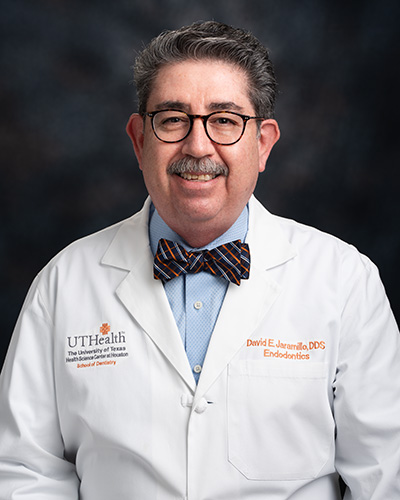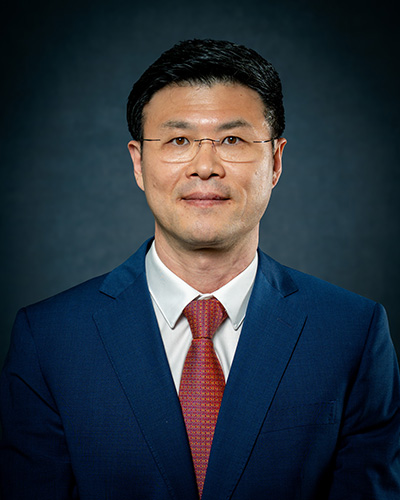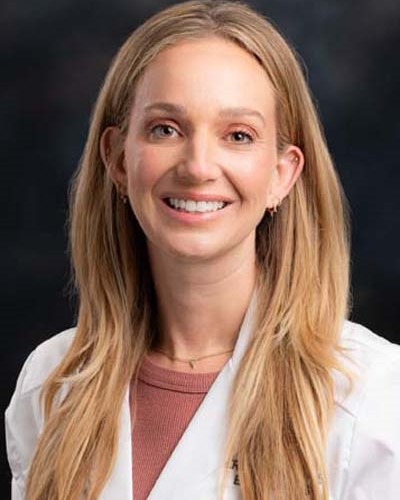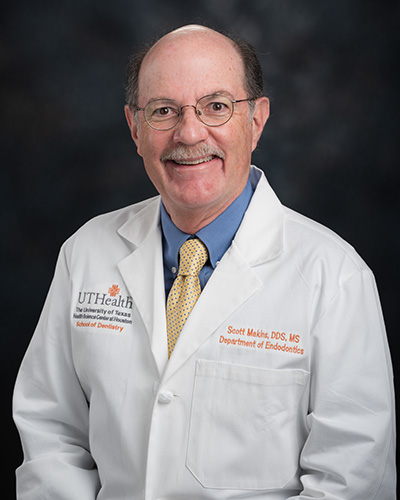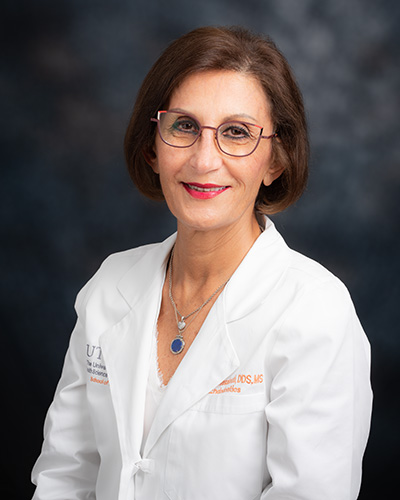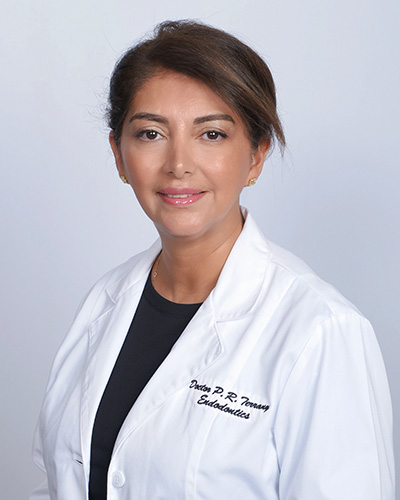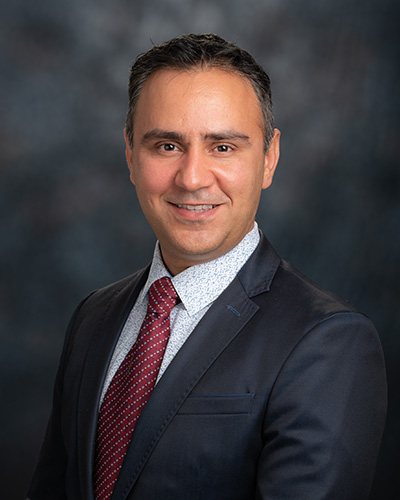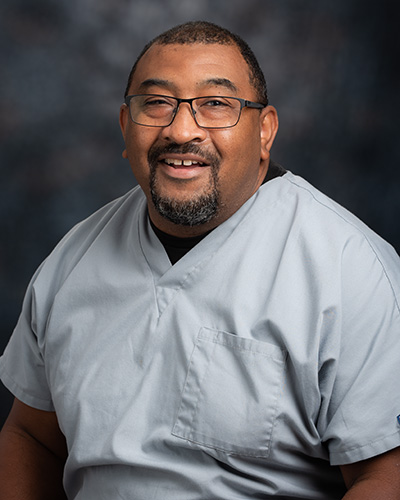
DDS
ProfessorChair for Department of Endodontics; Advanced Education Program Director of Endodontics


The Department of Endodontics at UTHealth Houston School of Dentistry advances the art, science, and practice of endodontics through excellence in education, patient care, and research.
As a leader in clinical education and innovation, the department was the first in the nation to equip every operatory in its endodontics clinic with an operating microscope — setting a national standard for precision and visualization in patient care. The clinic also features a dedicated cone beam computed tomography (CBCT) unit and the latest technologies that support state-of-the-art endodontic treatment. This advanced learning environment allows students and residents to perfect diagnostic and treatment procedures using the most current tools available in the field.
The department offers a 26-month Advanced Education Program in Endodontics leading to both a Certificate in Endodontics and a Master of Science in Dentistry (MSD) degree. This rigorous program prepares residents for clinical excellence, academic leadership, and professional advancement within the specialty. Graduates of the program have gone on to distinguish themselves as outstanding clinicians, educators, and leaders — reinforcing the department’s reputation as one of the nation’s premier endodontic training programs.
To provide high-caliber endodontics education in the development of outstanding health care professionals.
To be an international leader in endodontics through an integrated approach to education, patient-centered care, community service, and meaningful research.
Consistent with our mission and vision statements, our goals focus on four core areas: